01
Read the body
A movement and tension assessment. We find what is loaded and what has stopped moving.
 Book a session
The Maestro Method
The same four steps every time, so you always know what you are paying for and what happens next.
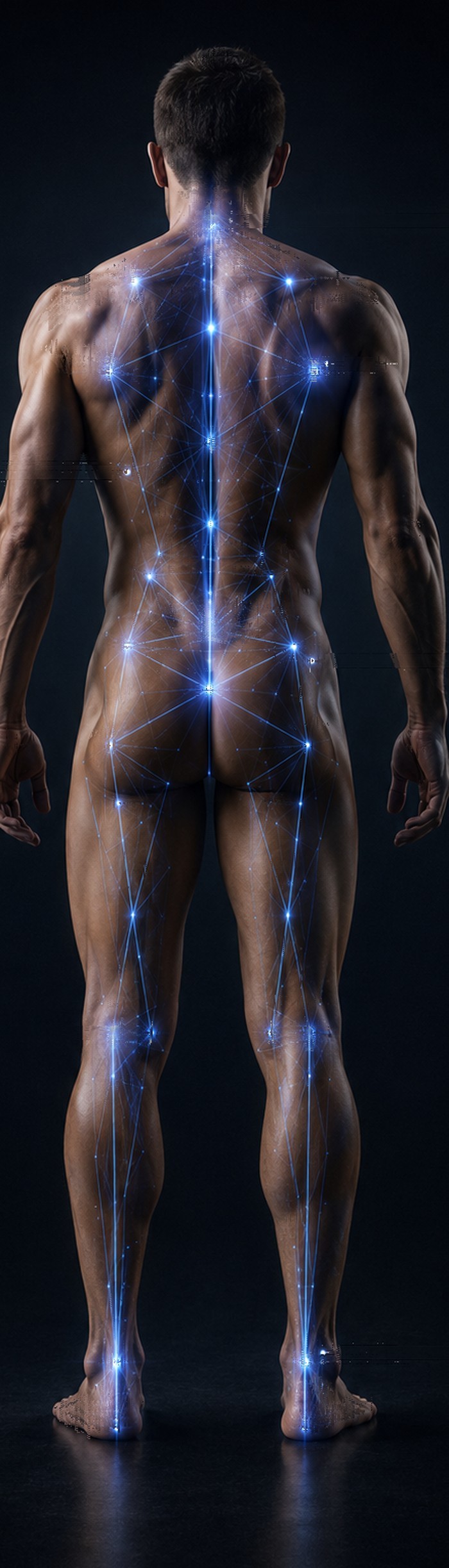
Every first session starts with an assessment, because where it hurts and what is causing it are often two different places. We look at how you move: rotation, extension, range side to side, and what your work and training week actually looks like. It takes about fifteen minutes and it determines everything that follows.
Targeted deep tissue treatment on the muscles the assessment identified. Deep tissue work, trigger point release, myofascial techniques and assisted stretching, in whatever combination the findings justify. Pressure is set with you, not applied to you, and firm should never mean bracing through it.
Range you do not load is range you lose. So the session ends with two or three specific pieces of movement or strength work, matched to what we found and to the time you realistically have. Two things done four times a week beats twelve things done once.
Then the practical part. What changes at your desk, in your car, in your training week. Progress is reviewed against the assessment numbers from session one, so improvement is something we can point at rather than something we assume.
Diagnose. Promise a fix in one session. Sell a block of ten before knowing whether three will do it. If something looks like it needs a GP or a physiotherapist, you will be told plainly and pointed in that direction.
The four moves
01
A movement and tension assessment. We find what is loaded and what has stopped moving.
02
Targeted sports massage and deep tissue work on the muscles that are holding you back
03
Practical mobility and strength work so the change holds past the treatment table.
04
A plan for your desk, your training and the rest of your week, reviewed as you progress.
Questions
Please wear comfortable clothing that allows you to move easily, ideally similar to what you would wear to the gym. Shorts and a T-shirt or vest are all suitable.
For men: Loose shorts are ideal, particularly if we are treating the hips, glutes or legs.
For women: Shorts are suitable, along with a vest top, T-shirt or bra that you feel comfortable in. A standard bra may make access around the upper back and shoulders easier than a high-coverage sports bra, but your comfort always comes first.
You will remain appropriately covered throughout the treatment, with only the area being worked on exposed. You never need to remove more clothing than you are comfortable with; treatment can be adapted to work through clothing where needed. Please avoid tight jeans, restrictive clothing, belts, bulky jewellery or items with large zips.
Questions about your week, your work setup and your training, then a movement assessment. Treatment starts once there is a reason for where it starts.
Two or three specific things to do between sessions, chosen so they fit the day you actually have rather than an ideal one.
For an active problem, weekly or fortnightly at first, then spacing out as things hold. For maintenance, monthly suits most people. You should be aiming to need less over time, not more.
Book an assessment and treatment, and get a plan you can actually keep to.